
Choosing well before you pay
Five decisions happen before payment one: which finds site to trust, which seller, which agent, which item, and whether the thing should ship at all. Each gets its checklist here, built from published rules and scars.
Judging any finds catalogue, this one included
How to judge a finds site before you lean on it: four tests separate a maintained catalogue from an abandoned one, and none requires trust.
- Freshness you can read: a visible last-reviewed date on the page, recent enough to matter.
- Dead-link rate: open five random cards; a maintained site keeps broken targets near zero because someone re-tests them.
- Image honesty: thumbnails sized for lists, not seller originals hot-linked at full weight.
- A named operator with a working mailbox, so errors have somewhere to go.
This site publishes its own answers on the shelves page and the about page; apply the same four tests anywhere else you browse.
Vetting a seller with the signals each platform gives you
The three source platforms expose different evidence, so one checklist does not fit all. On the 1688 tab you are reading factories: look for repeat-order counts and whether the gallery shows the actual batch, and expect colour drift between batches. On Taobao, shop age and review photos with dates carry the signal. Weidian shops run thinner storefronts, so the transaction feed and how concretely the seller answers a sizing question do the work.
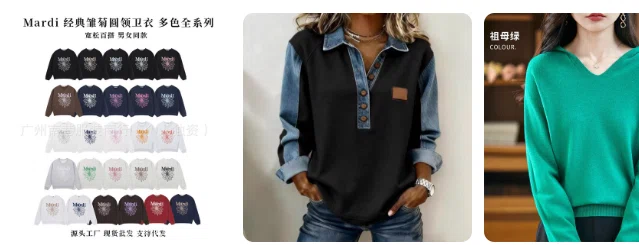
One tell works everywhere: a seller whose gallery includes a factory watermark or a wholesale stamp is relisting someone else’s photos, like the left tile in the frame here. That is not disqualifying at wholesale prices, but it means the photo is not the batch you will receive, so inspection photos matter double.
Trusting an agent, four lookups first
Choosing an agent you can trust is a lookup exercise, not a leap: any agent worth a first order survives these four, each doable in ten minutes.
- A legal entity you can name: here, Openbuy Technology HK Limited, number 77213008, printed on the Contact page, read 2026-10-10.
- Fee pages that commit in writing, with the hedges kept visible, like the “generally ¥ 8.00” declaration line.
- Policy pages that cost the operator something: a published counterfeit-destruction clause binds them, not just you.
- A reachable mailbox and a community channel that answers in public.
An agent failing lookup one or two is not automatically a scam; it is simply unverifiable, and unverifiable is a no for a first order.
Picking the item itself
Judging a listing before you order comes down to measurements over adjectives. For clothing, ask for the size chart photographed on the garment, then compare against a piece you own; waist and inseam drift of 2-3 cm is routine on export cuts. For modelled photos like the one here, remember the model’s proportions are part of the styling: the measurements, not the look, decide your size.
Price sanity has one rule: when the same photo set appears across many shops at wildly different prices, the cheapest one is selling the photo, not the garment. Mid-range price with a dated review photo beats rock-bottom with none.

The published rules that bite before payment
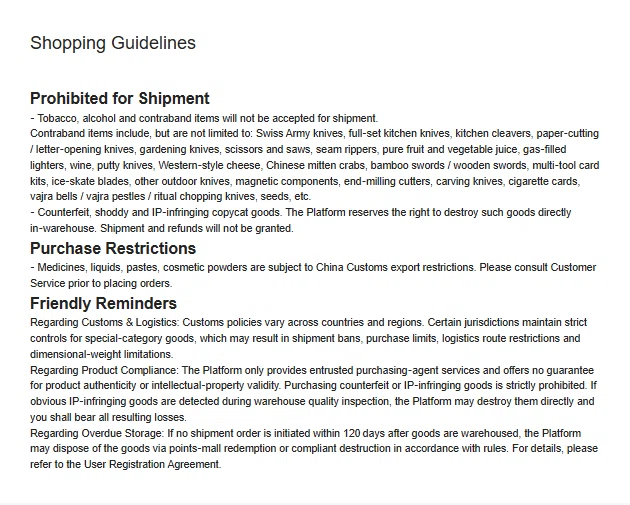
Read the Shopping Guidelines once before your first order; three clauses, all read there on 2026-10-10, do most of the biting. Tobacco, alcohol and a long contraband list are refused at intake. Counterfeit, shoddy and IP-infringing goods can be destroyed in-warehouse with no shipment and no refund, in exactly those words. And goods left 120 days without a shipment order can be disposed of outright.
Restricted categories, medicines, liquids, pastes, cosmetic powders, need a support conversation before purchase, not after. The prohibited list is compiled from export law and platform rules and the operator reserves the right to extend it, so when in doubt, ask first and keep the answer.
Other shopping agents, and how to read that market
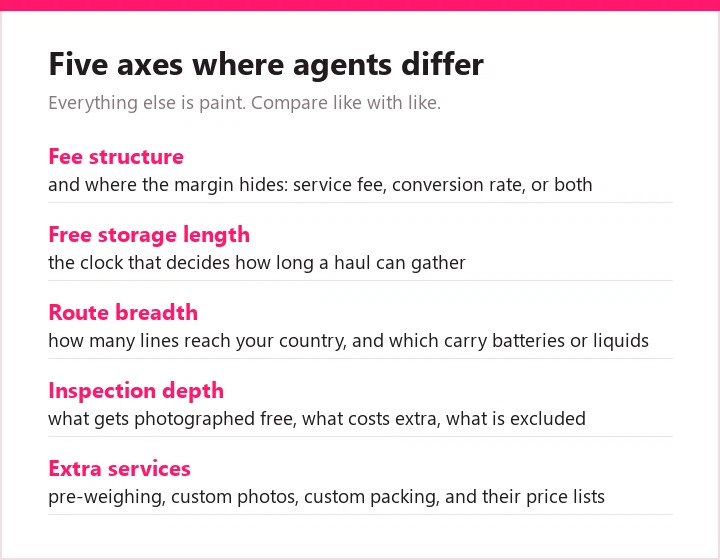
Oopbuy is one of many agents you’ll also see named in community threads, and the market reads cleanly once you know the five axes where agents genuinely differ: fee structure and where the margin hides, free-storage length, route breadth to your country, inspection depth, and extra services like rehearsal packing. Everything else is paint.
This site does not rank agents, because speed, service and risk have no public, reproducible data source, and a ranking without one is fiction. What transfers is the method: pull the same six numbers from any agent’s published pages, date them, and compare like with like. The panel on the fees page is that template filled in for Oopbuy; filling it for anyone else takes an evening, not a leap of faith.
Last reviewed: 2026-10-11.