
Inspection at the Oopbuy warehouse
Between purchase and shipping sits the only moment anyone can still say no. Here is what the warehouse checks, what it photographs, what it refuses to judge, and the clock that starts the moment your item is stocked in.
The published scope, including the exclusions
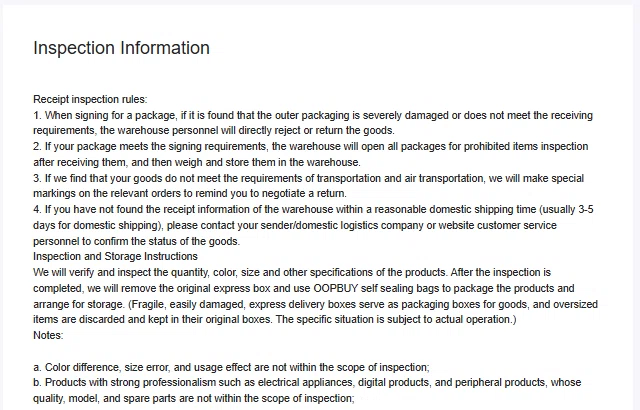
Receipt rules first: severely damaged outer packaging gets rejected or returned at the door. Accepted packages are opened for prohibited-goods inspection, then verified for quantity, colour, size and other label specifications, re-bagged in the platform’s own sealing bags, weighed and stored.
The exclusions are the part most buyers learn too late: colour difference, size error and usage effect sit outside the inspection scope in so many words; electronics and digital goods get an appearance check only, with no power-on test; sealed discs, handmade and adult items are not opened at all. Read 2026-10-10, quoted with its page.
Reading one real frame
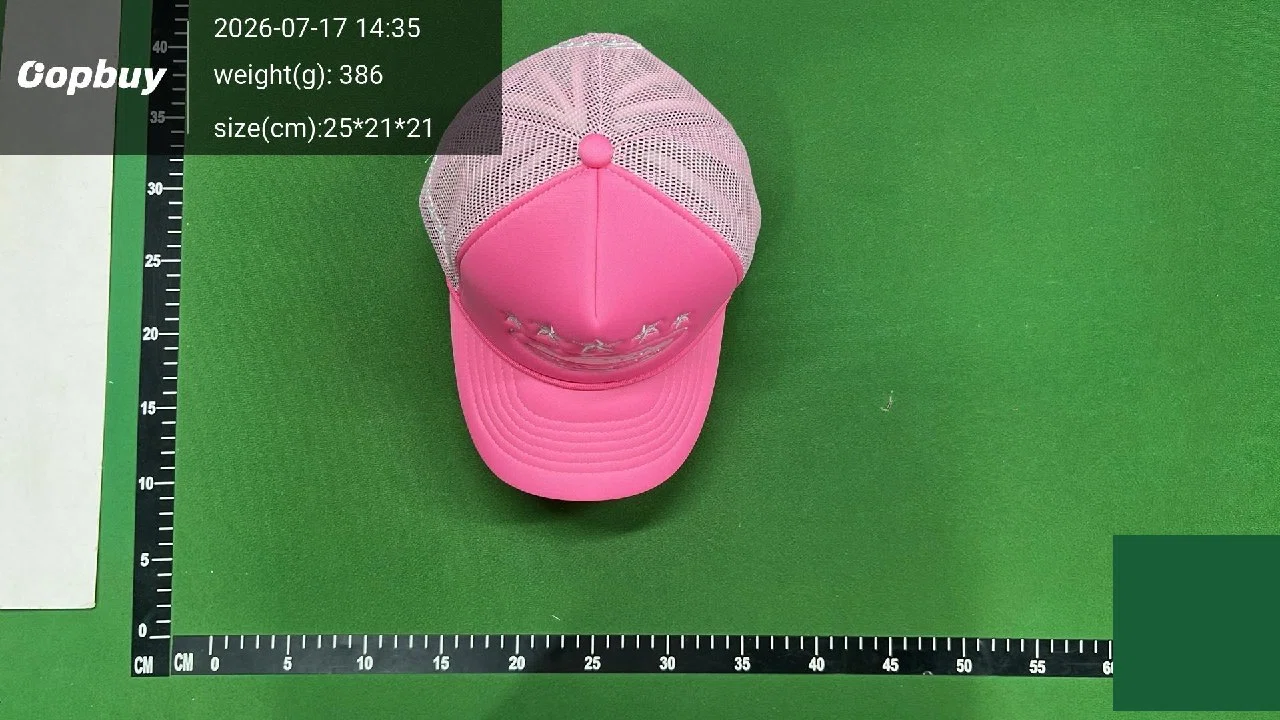
A standard inspection frame is a measurement document with a product in it. The overlay carries the timestamp, the measured weight in grams and the box dimensions; the mat underneath is a centimetre grid. On the frame below: 2026-07-17, 386 g, 25 by 21 by 21 cm around a mesh-back cap. Check three things in this order: the weight against the seller’s claim, the dimensions against the volumetric formula on the shipping page, and only then the item’s looks. A frame that proves weight and size has already paid for itself even if the colour photographs poorly, because colour difference is outside the scope anyway.
How many shots, and what the paid rounds add
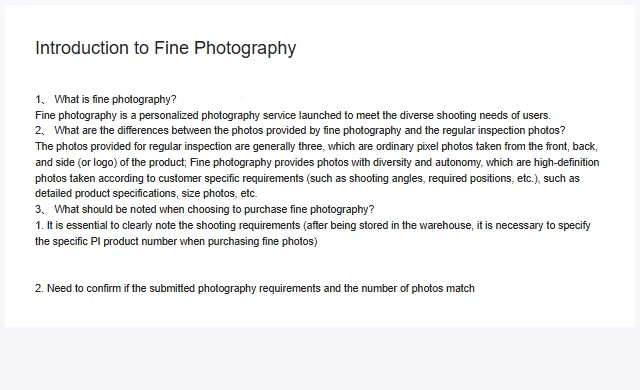
The help centre’s wording is “generally three” free photos per inspection: front, back, and side or logo. When three cannot answer your question, two paid layers exist: detailed photos at 1 RMB per shot against your written instructions, and Fine Photography, a custom shoot where you specify angles and positions in advance.
The habit that makes the paid rounds work: write the shot list into the request, by seam, by label, by sole. “More photos” buys you more of the same three angles; “inside collar label, close” buys you an answer.
When the photos show a problem
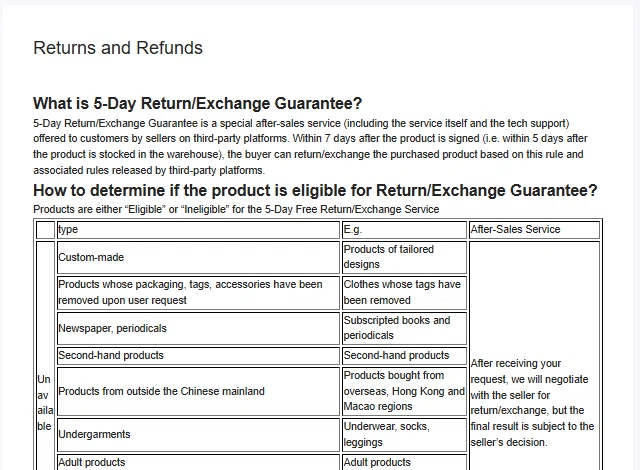
The return window is written in hours on the page read 2026-10-10: 5 days, defined as 120 hours, from the moment the status turns “Stocked in”, and only for items whose seller offers return cover, in re-saleable condition. The page’s own long exclusion table removes custom-made goods, de-tagged clothes, underwear, food and more; the seller holds the final say, and return freight is yours unless the listing carried free-return cover.
So the operational rule writes itself: open inspection photos the day they land, not the week after. The window is generous only if you start it on time.
Last reviewed: 2026-10-11.